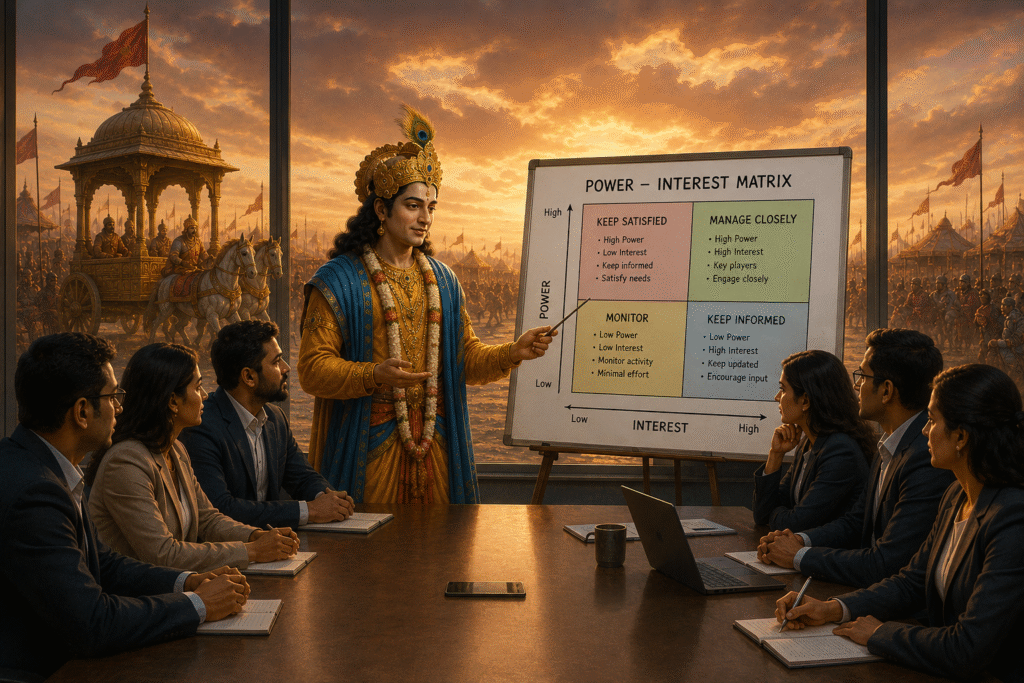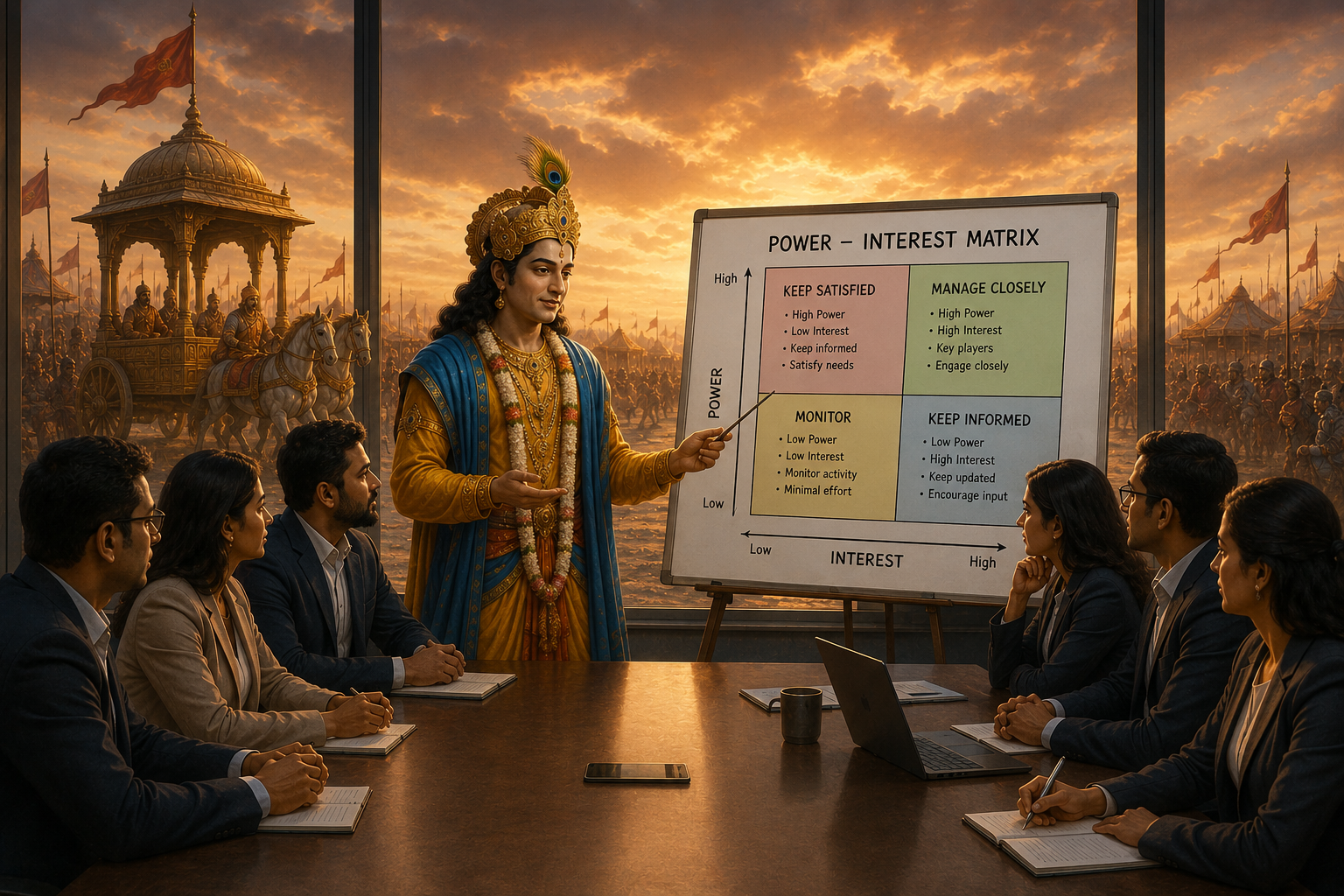
Krishna – The Ultimate Stakeholder Manager
Krishna is perhaps the most fascinating character in the Mahabharata.
To some, he is God. To others, he is a master strategist, philosopher, diplomat, or guide. He is admired, questioned, loved, and even criticised. Few characters have invited as many interpretations.
Yet one question has always intrigued me.
If Krishna possessed the power to end the war, why did he spend so much time persuading people instead of fighting battles?
He could have chosen force.
He could have led the army.
He could have personally eliminated Duryodhana and ended the conflict.
Instead, he chose a very different path.
He became a charioteer.
He became a messenger.
He became a negotiator.
Before the war even began, Krishna made repeated attempts to avoid conflict. He met kings, elders, and influential decision-makers. He tried dialogue before confrontation, persuasion before force, and diplomacy before war.
Why?
Because Krishna understood something every successful leader eventually learns:
Battles are won long before they are fought.
Modern project management calls it stakeholder management.
Every project has stakeholders—clients, sponsors, regulators, consultants, contractors, users, and sometimes even silent influencers. Each has different priorities, concerns, and varying degrees of influence over the outcome.
The best project managers don’t simply manage schedules and budgets.
They manage people.
They identify who can influence the project, understand what matters to them, build trust, negotiate differences, and create alignment before problems become conflicts.
Krishna demonstrated these skills repeatedly throughout the Mahabharata. His first instinct was rarely confrontation. It was conversation.
Today’s leaders use tools such as stakeholder mapping, the Power–Interest Matrix, influence analysis, and communication plans. While these are modern frameworks, the underlying principle remains timeless:
Understand people before trying to influence outcomes.
Whether you’re leading a family, managing a complex infrastructure project, negotiating a business deal, or building consensus within an organisation, success often depends less on authority and more on the ability to persuade.
Perhaps that is Krishna’s greatest lesson for managers.
Leadership is not measured by the number of battles you fight.
It is measured by the number of battles you prevent.
That leaves me with another question.
Was Krishna merely a master strategist, or was he an ethical pragmatist who believed that the right outcome sometimes demanded unconventional means?
I’ll leave that thought for the next article.