So, here’s how this plan came together.
After a long and tiring bike journey, we decided to give my brother’s garage queen—the Ertiga—a proper outing. The idea was simple: drive it from Kochi to Bengaluru and use it to explore places around the city. Short trips. Easy hikes. Maybe a trek, maybe just a relaxed drive.
Arun had recently moved to Bengaluru for work. A forced bachelor, courtesy of destiny. Like many such situations, Sundays suddenly felt very long. So we decided to put them to good use. Arun took on the task of creating a bucket list of places around Bengaluru, and I handled the itinerary—routes, timing, and what we’d actually do once we got there.
A couple of Sundays ago, we chose a destination from that list and headed to Avani.
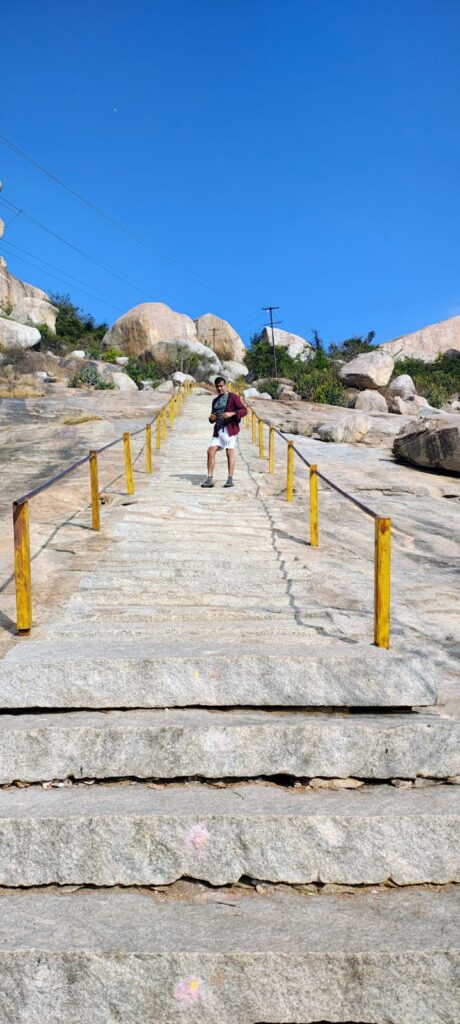
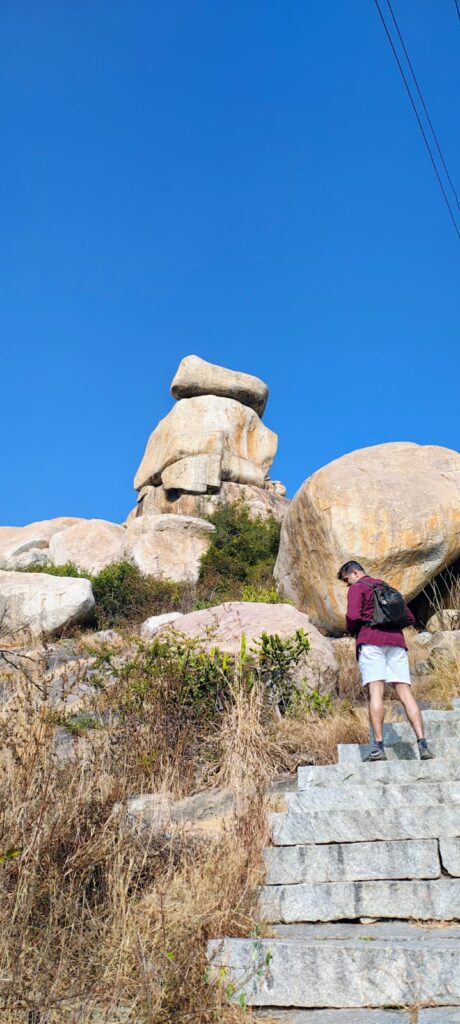
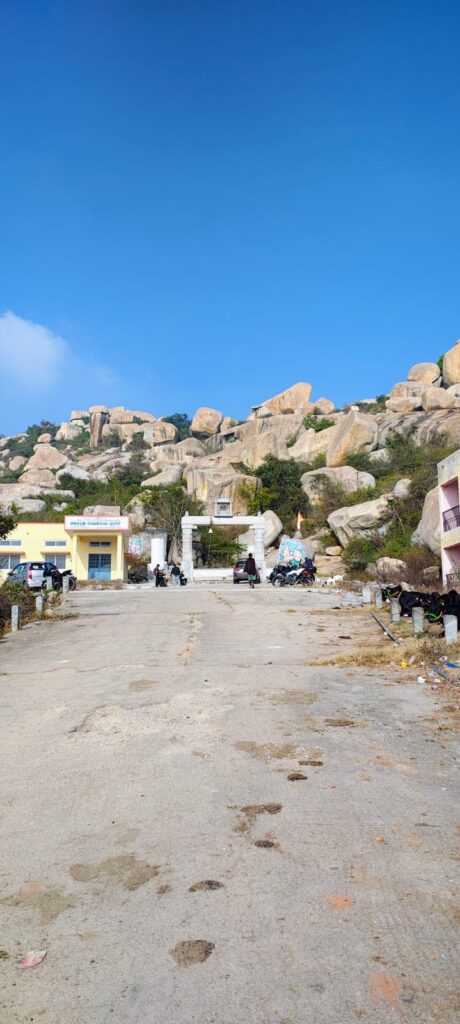
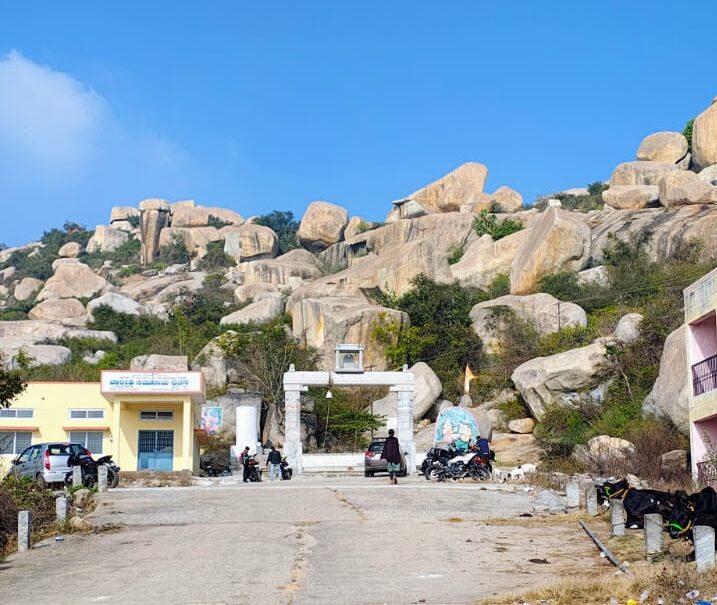
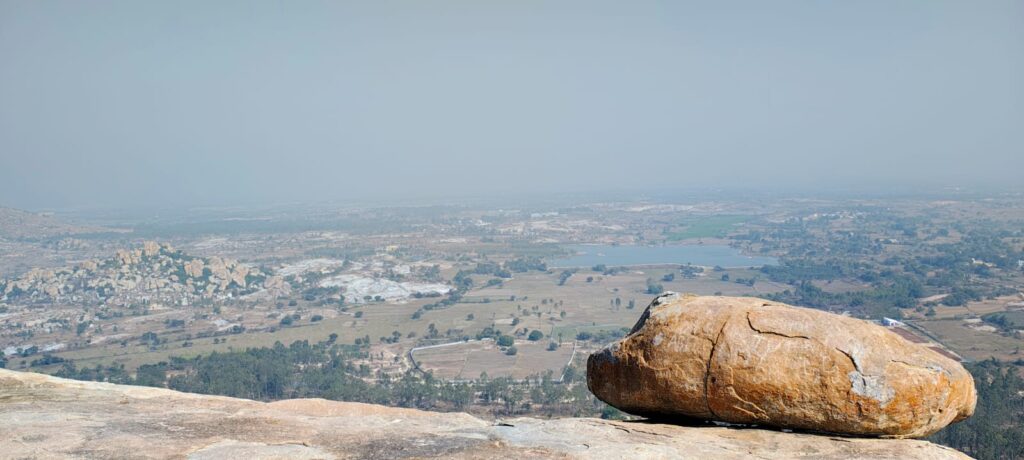
Avani is a small village in the Kolar district, about 100 km from Bengaluru, in the Mulbagal direction. We left early in the morning, which turned out to be a good decision—we were back in the city by noon. Early starts are important here because the hike gets uncomfortable once the sun is up. The rocky hill offers almost no trees or shade, so you remain fully exposed to the sun during the climb.
Avani is known for its annual fair, the Ramalingeswara temple at the base, and the Sita Devi temple located on top of the rocky hill. According to local folklore, Sita Devi lived here after her separation from Rama. It is believed that she gave birth to Luv and Kush at this place and that Sage Valmiki had his ashram on the hilltop.
As you climb towards the Sita Devi temple, you’ll notice a few rooms carved directly into the rock. These are believed to be the spaces where Sita Devi and her children lived. There’s also a spot on the hill where, according to legend, the white horse from Rama’s Ashwamedha Yagna wandered in and was tied by Luv and Kush – leading to the famous confrontation described in the Uttara Ramayana.
I wouldn’t really call this a trek. It’s more of a steady hike, with a few water bodies along the way—each carrying its own mythological significance.
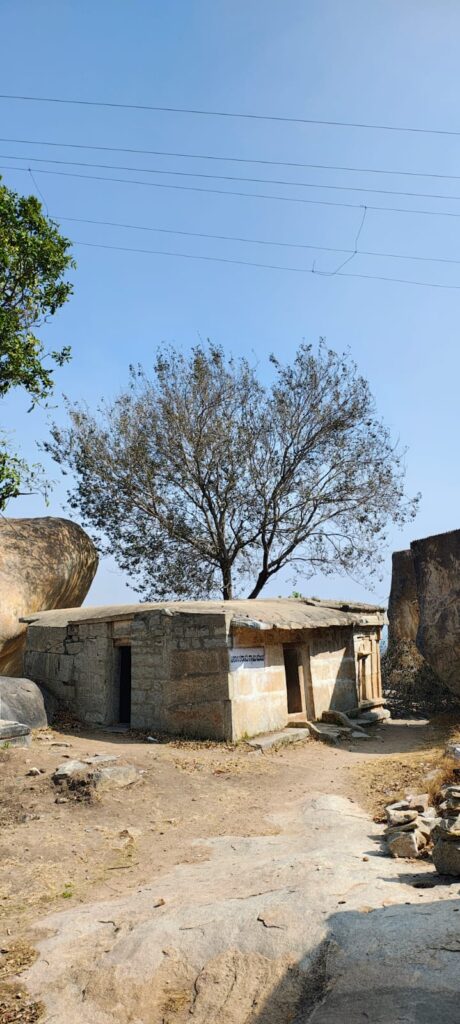
The main highlights are the short uphill hike, the wide scenic views from the top, the raw thrill of walking on exposed rocky terrain, and the Ramalingeswara temple at the base. The temple itself is quite unique. It houses four Shiva lingas, each dedicated to one of the four brothers. The structure dates back several centuries—it was originally built by the Nolambas, later maintained by the Cholas, and eventually by the Vijayanagara dynasty. Made entirely of stone, the carvings have softened over time due to weather, but the temple is well maintained and protected by the ASI.
What I found interesting was the connection this place triggered in my mind. Some time ago, I visited a Luv Kush temple near Sultan Bathery in Wayanad, which shares a similar belief. There, too, it is said that Sita Devi stayed in Valmiki’s ashram deep in the forest, gave birth to Luv and Kush, and eventually returned to earth. I couldn’t visit the ashram itself since it was already evening, but there’s a small structure inside the forest believed to be the spot where she lived.
So, I’ll leave it to the believers—and the curious—to decide which part of Bharat Sita Devi chose for her exile; where Luv and Kush were born; and where her journey ended.
For the rest of us, Avani Betta makes for a simple, meaningful Sunday escape—part hike, part history lesson, and part quiet reflection.