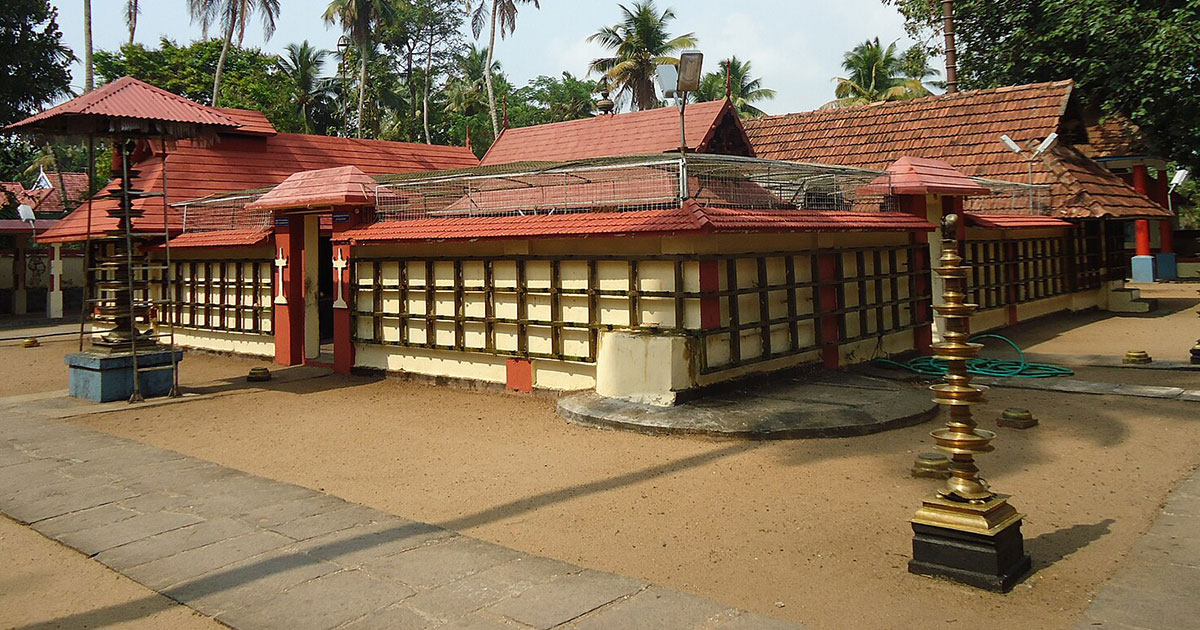
Devi Temple, Kothakulangara
The moment I walked into the temple grounds, I felt it—that familiar buzz in the air. The kind you only get during an Utsavam. People were everywhere, chatting, smiling, helping each other, or just soaking it all in. There was no entry fee, no boundaries. Just people from all walks of life coming together, sharing a common space and a shared joy.
Kids were running around, full of excitement. Some had already picked spots close to a small stage set up near the temple. A performance was about to start, and you could feel the anticipation. Families sat cross-legged on the ground, some brought small mats, others just found a clear patch of earth. Everyone wanted a good view.
The evening’s highlight was Koodiyattam, a traditional Sanskrit theatre form that’s been around for over a thousand years. It’s slow, expressive, and deeply rooted in Kerala’s culture. I remember watching it as a child, though I probably didn’t understand much back then. Now, it feels like a rare treat to witness such an art form still alive and being performed.
But my personal favourite part of the evening came earlier—getting the elephant ready for the pradikshana. I always loved this part as a kid. It’s almost like a ritual in itself: washing the elephant, feeding it rice flakes, jaggery, and bananas. Then comes the beautiful ornament, called as NETTI PATTAM, which they place on its forehead and trunk. The mahout gently gives instructions, and the elephant slowly sits down.
The priest then climbs up, holding the small idol of the Devi. This part always made my heart race a bit—the elephant first rises on its back legs, and it feels like you’re on a ride. The poojari has to be careful not to fall, especially when it sways during the climb. Then the procession begins, led by a man holding a flaming iron pole, followed by musicians playing chenda and the temple trumpet. People walk behind in quiet reverence, some clapping gently to the rhythm.
It brought back a wave of childhood memories. Back then, Utsavams lasted ten full days. The whole town would light up. It felt grand, like a never-ending celebration. Today, things are a bit toned down. Not as many decorations, maybe fewer events. But still, the spirit is there.
A group of young artists performed Koodiyattam later in the evening. They were fantastic—so focused and expressive. The crowd really appreciated it. It was nice to see people clapping, encouraging the artists, staying back to watch, even though it was getting late.
After the show, there was a community dinner. Everyone stood patiently in line—no rush, no fuss. Just people enjoying a simple meal together, sharing stories, and smiling.
Sitting there, watching it all, I couldn’t help but compare it to the Utsavams of my childhood. So much has changed in the last 40 years. The festival isn’t as big or loud anymore. But some things remain—like the joy on the elders’ faces, still looking forward to the next celebration. And the younger ones? You can see them watching with curiosity, maybe even wondering what all the excitement is about.
And that gives me hope. Because as long as one child looks up at the temple elephant with wide eyes—just like I once did—this tradition isn’t going anywhere.
photo courtesy: google
Leave a Reply
You must be logged in to post a comment.