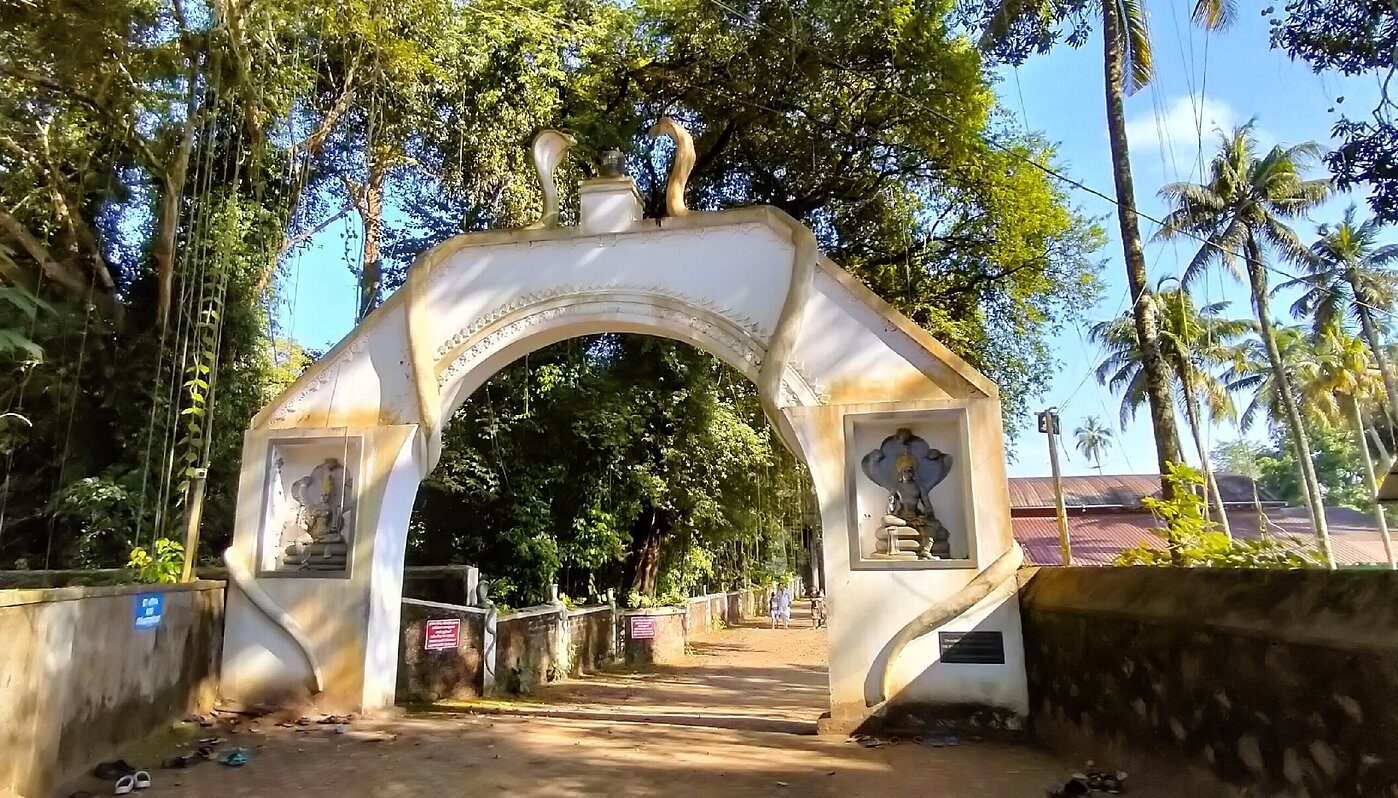
Lately, I’ve found myself enjoying visits to places of worship—especially old temples. My mom is absolutely into it; for her, it’s more than just a hobby. It’s kind of like her personal mission in life. So whenever I’m around, I try to take her along.
On a recent trip to Angamaly, we ended up visiting a place called Pambu Mekkat Mana. Though, to be honest, it’s not exactly a temple. It’s a Mana, which basically means a traditional ancestral home, usually owned by Namboodiri (Brahmin) families in Kerala. This particular Mana is over 250 years old.
“Pambu” means snake in Malayalam, and according to local lore, the serpent deity Vasuki himself visited this family around 1200 years ago and blessed them. Since then, the family has been worshipping Vasuki in various forms.
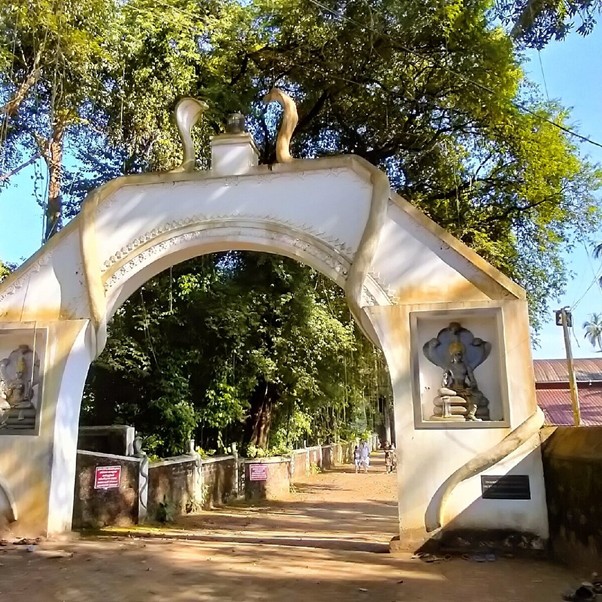
Now, every old place has its own story, right? But what really got me here wasn’t just the myth—it was the unwavering dedication of the family. Imagine keeping up rituals and traditions for over a thousand years! That level of commitment is something else.
Another thing that really stood out was that the rituals here aren’t led by a priest or any male member. It’s actually the Amma—the mother of the house—who performs the main poojas and tantric rituals. That’s pretty rare, considering temple rituals are usually the domain of men. I was lucky to receive Amma’s blessings—she hardly ever comes out in public. She accepted our offerings and blessed us from inside the Mana. I only caught a glimpse of her for a few seconds, but that alone felt special.
You can’t just drop by the Mana anytime, though. It’s open to visitors only on specific days, according to the Malayalam calendar. I didn’t go inside the Mana itself, but I spent a bit of time in the outer premises and had some lovely conversations with the folks who manage the place.
Here’s where it gets even more fascinating—the Mana holds tantric importance. It’s believed that the tail of Vasuki is consecrated at this location. The head is in Nagercoil (Tamil Nadu), and the torso or belly part is believed to be in Mannarkkad (Kerala). People who believe they are affected by Sarpa Dosham—a curse associated with snakes—come here to perform rituals and offer prayers in hopes of finding relief.
Sounds like the plot of a movie, right? But that’s the kind of significance this place holds for many. There are serpent idols everywhere, and the Mana sits quietly, almost mysteriously, amidst the trees. It feels sacred, a little eerie, and deeply powerful all at once.
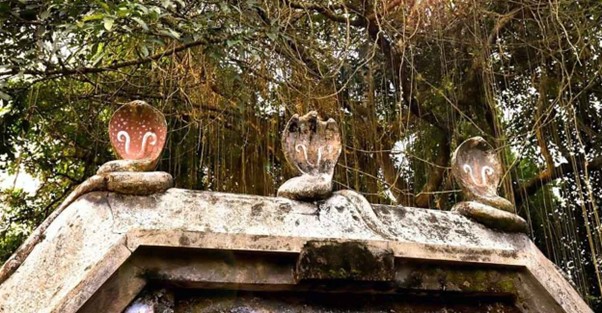
To some, it might even look haunted. But to believers, this is a space steeped in grace and tradition. Bringing science into the picture here somehow feels like it would miss the point completely. This place isn’t about logic—it’s about faith, legacy, and something far older than we can probably understand.
It was getting late, and we still had a couple of nearby temples to visit—places just as powerful, packed with their own political and historical stories. After having our prasadam (jaggery with rice and a splash of oil), we headed off to the next destination.